
Stop Trying to Stand Out. Start Owning the Part of the Market Everyone Else Forgot to Claim.
1/29/26
(Postcards from a Strategy House)
Because standing out isn’t the goal. Owning the space where your buyer makes their purchasing decision is.
If you’re in the beauty or wellness space, chances are you’ve whispered this question into the void at least once:
“How the hell do we stand out?”
Because let’s be honest it feels saturated out there.
Screw that…it IS saturated out there.
Beige on beige, rituals on rituals, everyone drinking the same adaptogenic latte.
So naturally, you do what every founder does.
You tweak colors. You bookmark moodier photoshoots. You hunt for a font with more bite.
And that stuff matters ALOT.
But here’s the twist I’m seeing across every client conversation lately:
You’re hunting for your edge in your visuals, when your edge is sitting somewhere else entirely.
It’s not in your palette.
Not in your typography.
Not in your “we just redid our brand board again” vibe.
Your edge is hiding in:
• the tension you solve
• the moment your product lives inside
• the belief you hold that the rest of the category is too distracted to notice
Except… you can’t see it yet.
Why?
Because you’re still trying to read the label from inside the bottle.
And that’s where this piece begins:
With you finally seeing the part of your brand no rebrand can surface for you on its own.
Let’s think of branding this way….
Branding is the outfit, the way your brand walks into a room.
It’s the palette you obsess over at 11 p.m., the tone you keep refining because it feels close but not quite, the photography style you pin 47 versions of because you’re trying to articulate a feeling you haven’t fully named yet.
Branding is the mood, the texture, the aesthetic, the vibe.
And it matters. A lot. It shapes perception, it cues emotional resonance, it creates desire.
But and this is the part most founders never hear branding is what someone notices first, not what they remember or buy because of. (read that again*)
Your edge is something entirely different.
Your edge is the room you choose to walk into.
It’s the territory you claim, the slice of the category you quietly dominate while everyone else is performing for the algorithm. It’s the tension you solve, the belief your work is built on, the specific white space no one else is paying attention to because they’re too busy choosing a new serif font.
Branding asks, “What feels like me?”
Your edge asks, “What can we own that no one else is noticing yet?”
Those two questions live in completely different parts of the brain.
One is identity-driven; the other is strategic.
You need both but not in the order most founders build them.
And this is where things tend to go sideways.
Most founders choose the vibe before they choose the message.
They build the aesthetic before they choose the lane.
They pick fonts before they pick a belief system.
This is why I always say the same thing (even to clients who don’t want to hear it yet):
a beautiful brand without an edge is a beautifully packaged shrug. It’s scrollable, saveable, Pinterest-worthy… but not memorable, not ownable, and definitely not converting at the level it could.
When you study category-defining brands like really study them you start to see the pattern.
So, let’s reverse-engineer how edges are built (and how to translate this thinking into your brand):
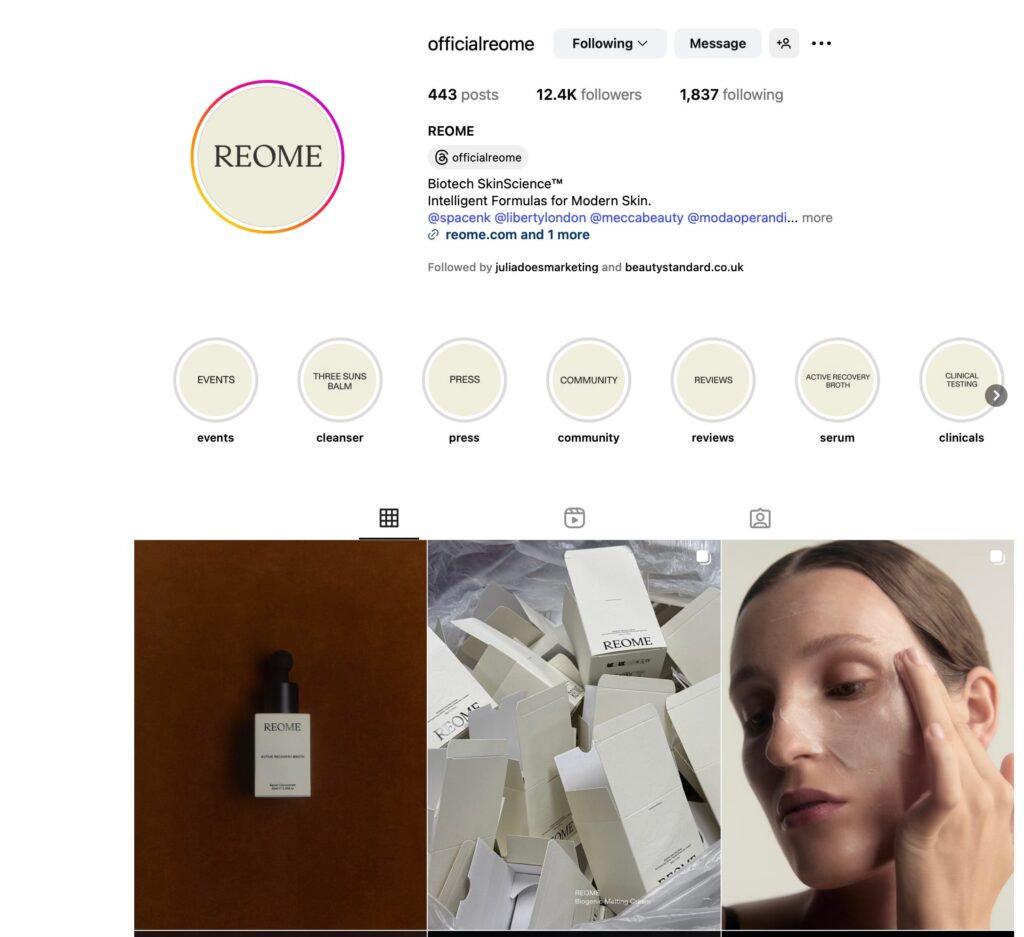
REOME — The Slow Ritual Biotech Brand
What they’re actually doing:
REOME didn’t try to compete in the saturated “clean girl” skincare space. They didn’t try to win on luxury, or ingredients, or packaging aesthetics (even though all of those are strong).
They chose a tension:
the modern woman’s stressed-out skin in a fast-paced world.
And then they chose a vehicle:
biotech repair as ritual.
The branding is soft, clinical-luxe, quiet, calm- supports this.
But the real edge is the position they claimed in the category:
Skincare for the pace of modern life.
How to steal this for your brand:
- Identify the pace or pressure your audience is under.
- Ask: “What is the stress point my product exists to soothe?”
- Anchor your positioning in the tension, not the trend.
- Then let your branding visually express that truth.
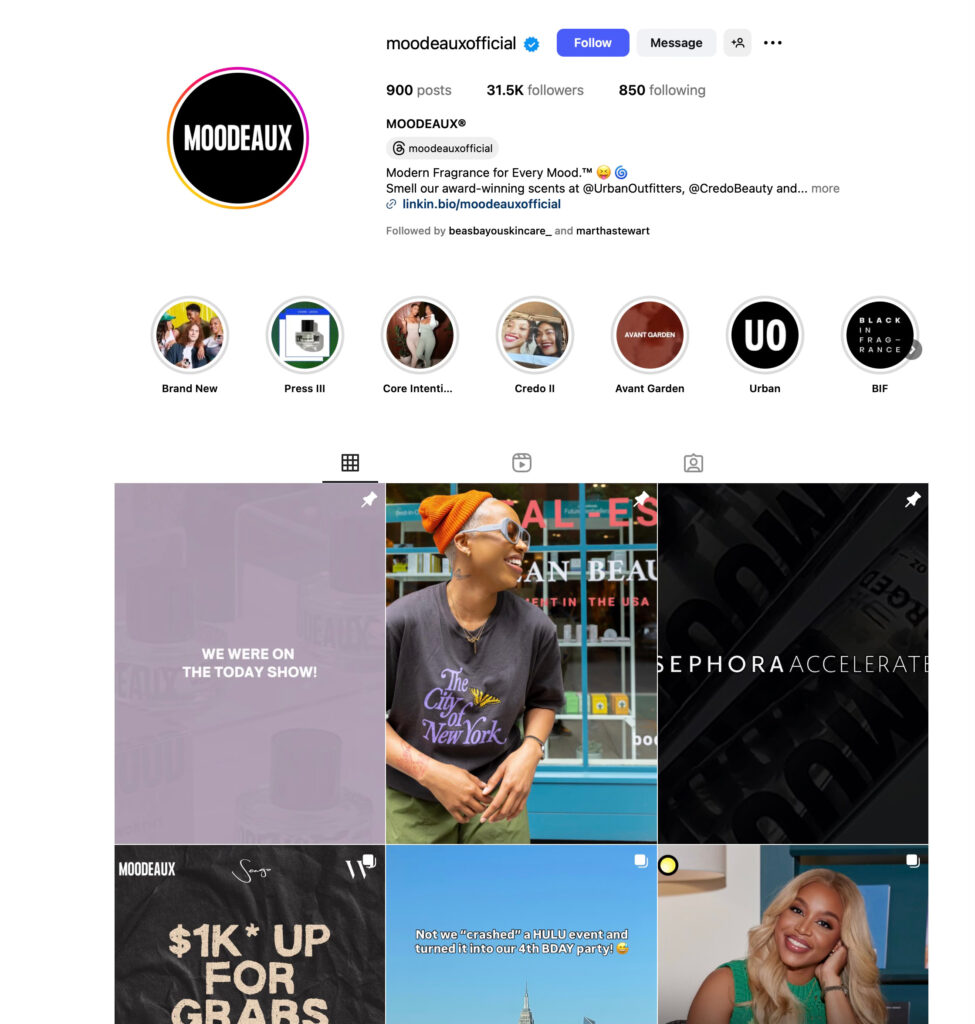
MOODEAUX — Mood as Fragrance, Fragrance as Identity
What they’re actually doing:
MOODEAUX didn’t say “here’s a new perfume.”
They didn’t compete with Le Labo or the designer scent aisle.
They chose a philosophy:
Fragrance as emotional wellness and identity.
They reframed the entire job of the product.
It’s not just about smelling good, it’s about feeling aligned, expressed, and grounded.
The bold, expressive branding amplifies that lane…
but the edge is the reframe.
How to steal this for your brand:
- What’s the emotional job your product really does?
- What truth do your buyers feel before they feel your product?
- Reframe your offer from “what it is” → “what it changes internally.”
- Let your brand become the mirror for that emotional identity.
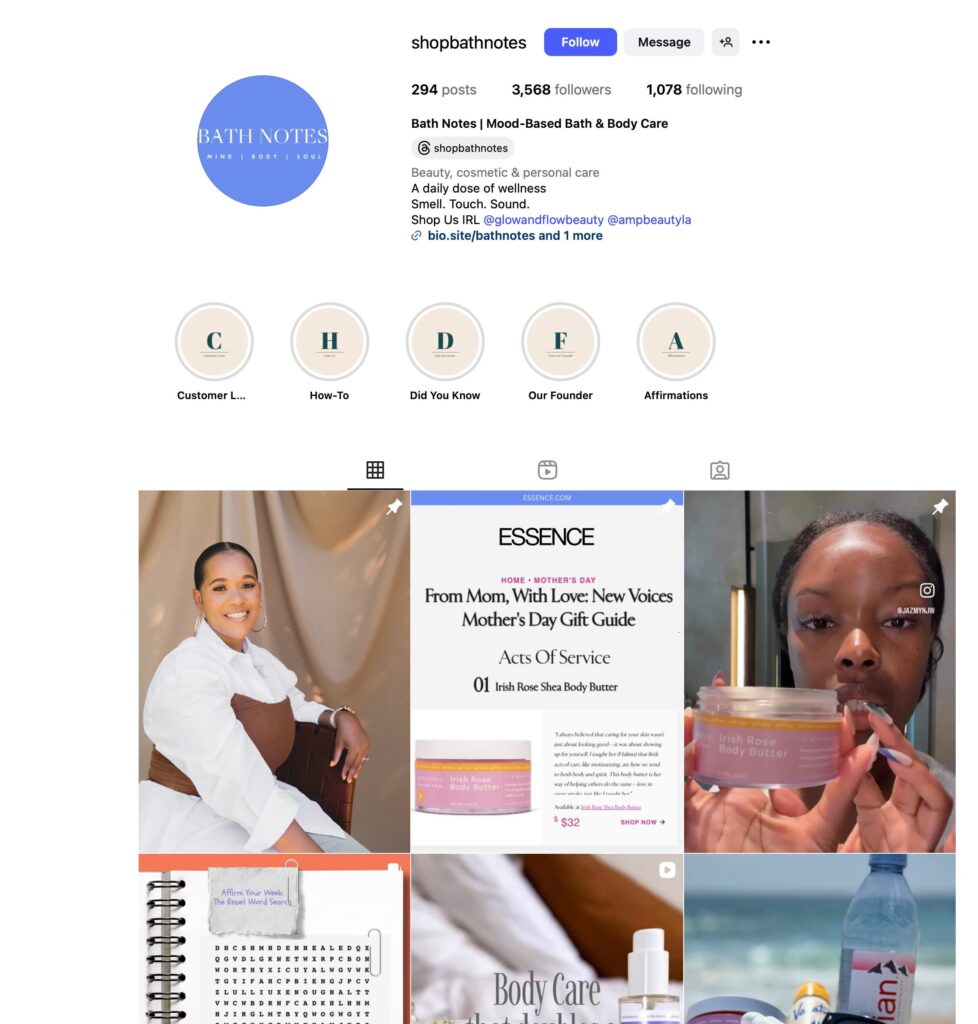
Bath Notes — Routines as Reset Rituals
What they’re actually doing:
Bath Notes didn’t say “we sell body wash.”
They didn’t compete on scent, suds, self-care, or packaging.
They claimed a moment:
the shower as a daily creative reset + mood therapy.
Their entire lane is built on the moment where ideas hit hardest — when the world is quiet and your mind opens.
That’s not branding.
That’s category selection at the molecular level.
The clean, sensory branding simply delivers the vibe of that moment.
How to steal this for your brand:
- Identify the specific moment your product lives inside.
Not “your morning routine.”
Not “your day.”
But the exact second your buyer needs you most. - Build your message around that moment instead of the product.
- Let the aesthetic express what that moment feels like.
Okay — so how do YOU find your edge?
Here are the questions I’d have you sit with (and what I walk clients through inside SPF House):
1. What tension does your brand actually solve?
Not the obvious one.
The felt one.
The one they won’t say out loud on Instagram.
2. What belief is your brand built on?
Every edge has a philosophy underneath it.
What is yours?
3. What slice of the category can you confidently claim?
Not the whole category.
Not the trending lane.
The tiny slice everyone is ignoring because they think it’s too simple.
4. What moment does your product live inside?
Is it a pause?
A relief?
A reset?
A craving?
A turning point?
5. What intersection do only YOU sit at?
Industry × lived experience
Craft × personality
Expertise × obsession
This intersection is often your deepest edge.
So if branding isn’t the edge… what actually is?
Your edge is built from 5 places founders almost never examine deeply enough:
1. The tension you actually solve.
Not the polite version, the felt tension.
The one your buyer doesn’t confess on Instagram but thinks about in the shower, in traffic, and anytime a “should” is breathing down her neck.
Edges live in tension in the friction between what is and what should be.
2. The belief your brand is built on.
Every high-conviction brand is secretly a philosophy in disguise.
What truth does your brand refuse to compromise on?
What do you believe about your category that most of the category gets dead wrong?
That belief becomes the gravitational pull of your message.
**3. The slice of the category you claim — confidently.
Not the whole market. Not the trendy lane.
The tiny, overlooked slice everyone else dismisses because it looks “too simple,” “too niche,” or “too specific.”
Edges are born in specificity.
This is where category queens quietly crown themselves.
4. The moment your product truly lives inside.
Is it a reset? A relief? A ritual? A shift?
Your buyer doesn’t remember features she remembers the moment your brand becomes essential.
Define that moment, and you won’t compete on aesthetics again.
5. The intersection only YOU occupy.
Industry × lived experience
Expertise × obsession
Skill × personality
This intersection is where your unfair advantage sits but most founders never articulate it because it feels too obvious to them.
(That’s usually the sign you’re sitting on gold.)
These aren’t branding questions.
These are edge questions and 95% of founders skip them completely.
And here’s what your edge is not.
It’s not:
- Your font choices
- Your tone
- Your aesthetic
- Your vibe
- Your ideal client’s hobbies
- Your packaging
- Your favorite creators
- Your mood board
Those things matter for expression but they cannot carry a brand that hasn’t chosen a lane.
A gorgeous aesthetic sitting on top of a blurry strategy is the business equivalent of a marble countertop on a collapsing house frame.
Beautiful? Yes.
But fragile.
Easily copied.
How we do this inside SPF House (it’s the non-sexy side no one glamorizes on Instagram)
- Competitor analysis that actually uncovers patterns
- Category mapping that shows you where the real gaps are
- Tension identification rooted in psychology, not vibes
- Message mining that reveals what your buyers really mean
- White space discovery and selection
- Brand lane refinement
- Depth positioning
- Founder energetics and narrative architecture
- Storytelling systems that translate strategy into sales
It’s not
“Which color palette feels like you?”
It’s:
“What part of this category can you own quietly, confidently, and sustainably while everyone else zigzags between trends?”
Branding comes after.
Branding expresses the strategy.
Branding supports the edge not replaces it.
When founders finally flip that order, everything changes.
Their content cuts deeper.
Their message becomes undeniable.
Their conversions rise because buyers finally understand who they are and why they matter.
The Edge Era
We’re entering a moment where beauty & wellness founders are done performing online.
They’re exhausted from running at algorithms, reinventing themselves weekly, and shouting louder just to keep pace.
What they actually want now is:
Clarity.
Depth.
A lane that feels like home.
A brand that feels inevitable.
A strategy that can hold real growth.
This is the Edge Era.
And your next level?
It’s sitting inside the part of your brand you haven’t claimed yet and the piece you can’t see from inside the bottle.
If you want help uncovering it, sharpening it, or finally owning it…
you know where to find me.
